
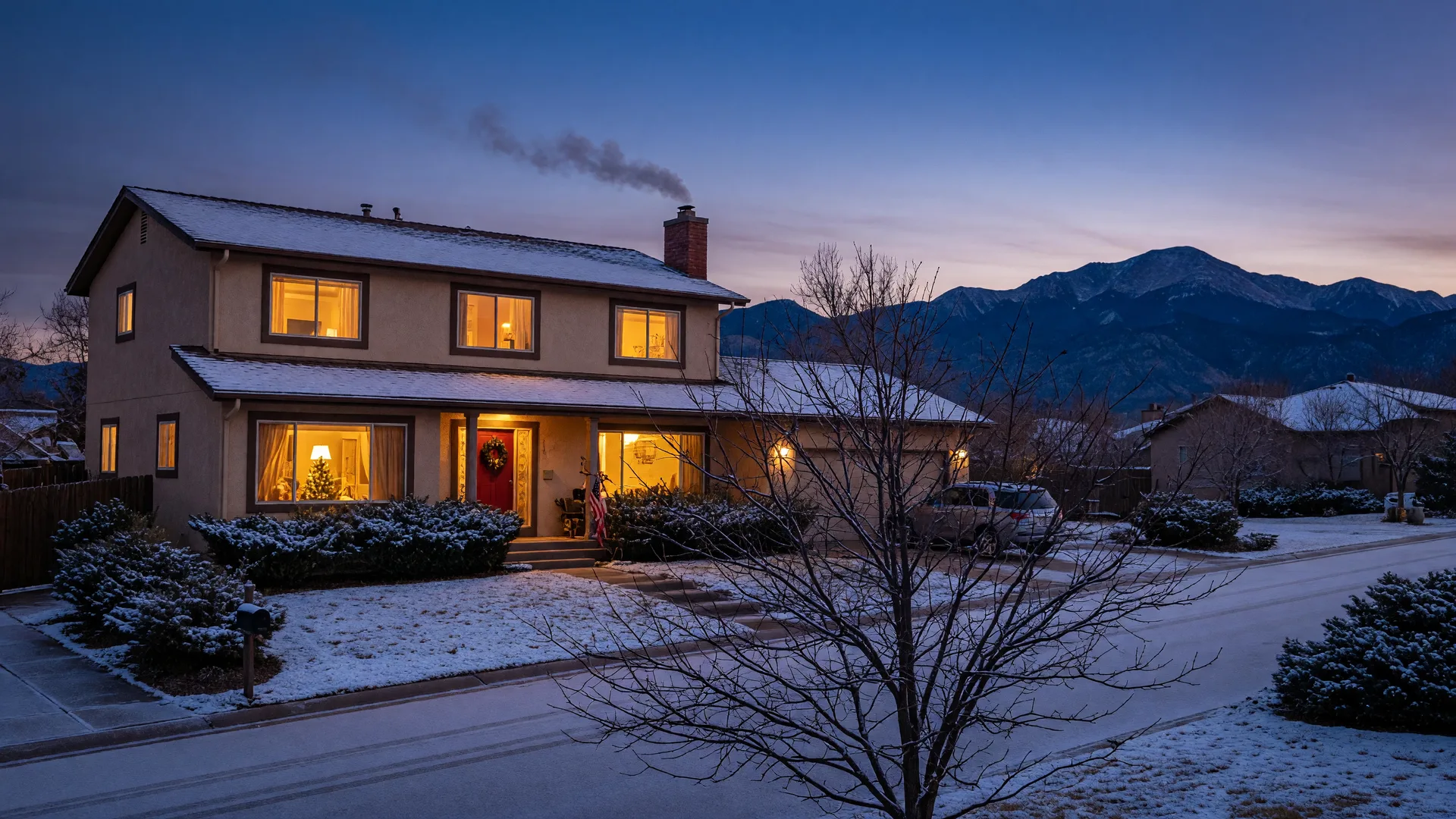
Winter 2026 Heating Bills Are Up: How Colorado Springs Homeowners Can Budget and Save
National forecasts point to higher winter heating costs in 2026. Here is how Colorado Springs homeowners can budget, save, and find help this season.
We are writing this one a little earlier than usual, and there is a reason. A recent Realtor.com story looked at winter 2026 heating bills and how homeowners are budgeting for them, and the timing matters here in Colorado Springs. National forecasts point to another season of higher heating costs, with the National Energy Assistance Directors Association (NEADA) projecting winter heating costs to rise roughly 8-9% this year, and some homes will see much bigger jumps depending on how they heat.
And then there is the Colorado part of the math. Winter weather is a real factor here, so expect gas and electric bills to run roughly $150-$250 a month through the cold months, depending on home size and insulation. That is not meant to scare anyone. It is the honest reality of life at altitude, and it is exactly the kind of number that belongs in a home budget before it shows up on a statement.
Before the Cold Hits, Budget for It
Start with the total, not the surprise. Take what you expect to spend across the whole season and divide it by the winter months, or set up a small monthly buffer now so January's bill does not land like a bolt from the blue. Even fifty or seventy-five dollars set aside each month while the weather is still mild turns a painful spike into a predictable line item.
The cliff note is simple: heating bills are one of the most predictable-yet-ignored seasonal costs, and a little planning smooths the spike. You would never be caught off guard by property taxes twice a year, and winter heating deserves the same treatment.
No-Cost and Low-Cost Ways to Save
The cheapest savings are the ones that require no wrench, no contractor, and no purchase. Start with the thermostat: set it to 68 degrees when you are home and awake, and dial it back while you are asleep or away. It sounds small, but it adds up fast. The U.S. Department of Energy estimates that turning your thermostat down 7-10 degrees for 8 hours a day can cut your heating and cooling costs by up to 10% a year. A programmable or smart thermostat makes that automatic, so you are not relying on your memory on a cold January night.
Then work your way around the house. Check and change your furnace filter monthly, because a dirty filter makes the whole system work harder for the same warmth. Weatherstrip the doors, seal the obvious air leaks around windows, and close dampers or vents in rooms nobody uses. None of these are big projects on their own. Together they are the difference between heating your home and heating the neighborhood.
Bigger Moves That Pay Off
If you can invest a little, do it before the first hard freeze. Schedule a furnace tune-up now, not when it is 10 degrees outside and the heat quits. Consider a home energy audit, which shows you exactly where heat is escaping instead of making you guess. And know that homes built before about 1980 often need insulation upgrades, one of the most common findings in an older Colorado Springs house and one of the biggest opportunities to cut next winter's bill.
One honest warning: some federal and utility incentives have shifted recently. Before you start any project, check what is currently available through your utility, for example Xcel Energy, and do not plan around credits that may have expired. Programs change, so verify first, then spend.
If Money Is Tight This Season
If your budget is stretched, help exists, and there is no shame in using it. In Colorado, the Low-Income Energy Assistance Program, LEAP, helps eligible households pay part of their winter heating costs, and applications are open from November 1 through April 30. You can apply through the Colorado Department of Human Services, and the LEAP hotline is 1-866-HEAT-HELP (1-866-432-8435).
Utilities also offer budget billing and payment plans that spread your costs evenly across the year, so the December spike becomes twelve predictable payments instead. Either way, the first step is a phone call, and it is worth making before the coldest weeks arrive.
Why This Matters If You Are Thinking About Selling
Here is the part people actually ask us about. If you are a homeowner considering selling, your heating system and your insulation are features, whether you have thought of them that way or not. A well-maintained heating system, recent insulation, and energy-efficient upgrades are exactly what buyers and appraisers notice. And we can speak to what homes in the area actually have, because we have been inside thousands of them over 24 years.
For buyers, energy costs are a real part of a monthly home budget in Colorado. Two homes at the same price can carry very different heating bills, so factor heating into your affordability picture before you fall in love with a house. It belongs in the same column as the mortgage, insurance, and taxes, and it is part of the honest monthly math we run on every home.
Want the Honest Monthly Numbers on a Home?
Whether you are budgeting for the winter ahead, preparing your home to sell, or comparing what a home would really cost to live in, we would love to walk through it with you. We have helped thousands of Colorado Springs homeowners with exactly this, and we will tell you straight what is worth doing and what is not.
Text us at 719-499-9394 or Book a free consultation.
Jeff & Lane Morrell | eXp Realty
This information is general and current as of October 2026. Heating cost forecasts and program details, including LEAP application dates and utility rebates, are subject to change and should be verified with the issuing agency or your utility before you rely on them. Nothing here replaces professional advice for your specific home or situation.